
Carrying out a successful marketing campaign is not an easy task, and if you are dedicated to it, you will understand what we are talking about. Besides promoting your brand’s new products or services, it is also necessary to monitor that they achieve the expected results. With a limited number of hours in a day, this task can take on colossal proportions. This is where marketing automation comes into play.
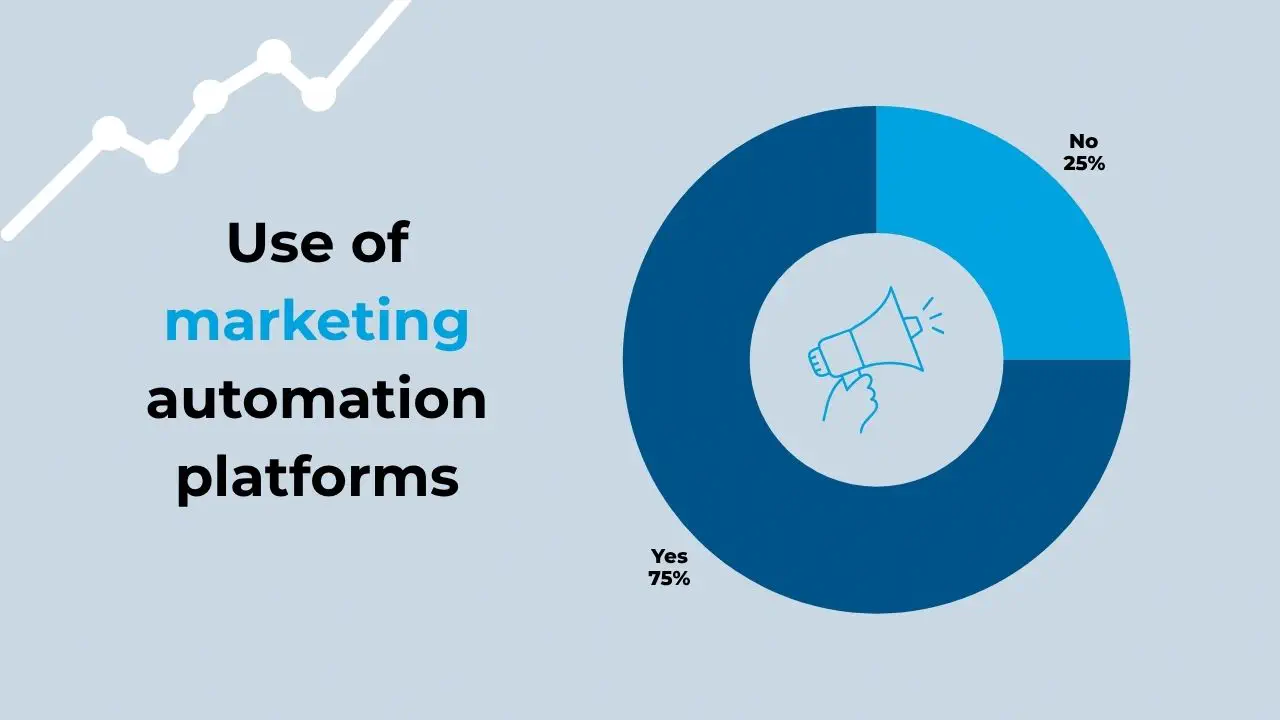
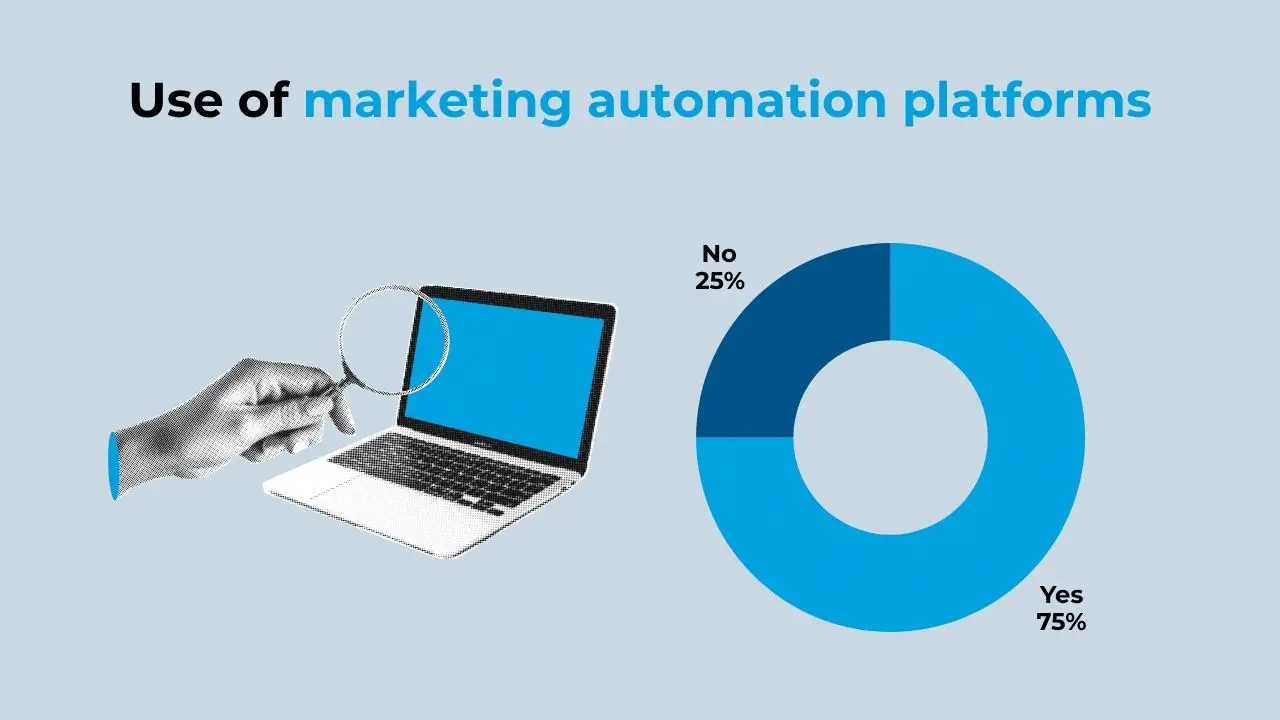
Did you know that 75% of companies worldwide already use some type of marketing automation tool for their campaigns? Or that 76% of them report having increased their conversion (ROI) in less than a year since implementing it into their workflow? Nowadays, automation extends far beyond automatically sending emails. Functions such as intelligent segmentation, integration into CRMs, or social tools make them essential for businesses of all sizes.
With generative AI taking a central role in the future of marketing automation, it is common to wonder about the current state of this industry and what awaits us in the coming years. In today’s article, we will examine the latest trends and statistics on marketing automation for 2025.
Main marketing automation statistics (2025)
- 75% of companies use a marketing automation platform or will implement one over the next year. (Adobe)
- 41% of companies have implemented a fully automated customer journey. (Statista)
- The use of Artificial Intelligence in marketing automation focuses on targeting or audience segmentation. (Ascend2)
- 58% of specialists use automation for their email marketing campaigns. (Ascend2)
- 46% of marketing specialists say automation has had a very positive impact on their campaign. (Hubspot)
- The global marketing automation market is expected to reach $21.7 billion by 2032. (Statista)
General statistics on marketing automation
Automation tools have become the perfect ally for marketing specialists. They have not only reduced the burden of repetitive tasks but also simplified the personalization of interactions with potential customers and monitored the success of these campaigns.
Next, we offer some of the most relevant statistics regarding the adoption, results, and uses of marketing automation tools.
3 out of 4 companies use a marketing automation platform
A recent study conducted by Adobe reveals that 75% of companies and businesses worldwide have adopted a marketing automation platform for their campaigns. Moreover, those who have not yet done so indicate that they will within the next year. These revealing data show how the adoption of these tools has ceased to be an isolated or anecdotal fact and has become a standard in the industry.
58% of automations are used in email marketing campaigns
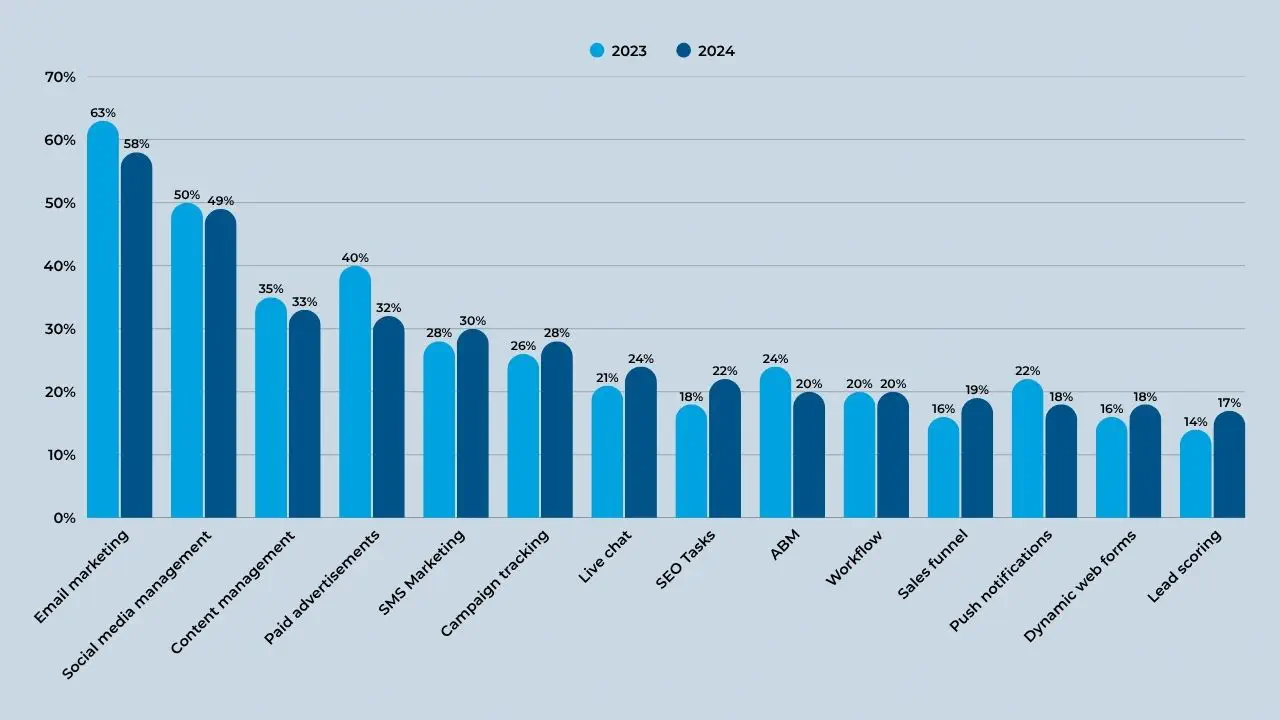
As reported in the The State of Marketing Automation 2024 report by Ascend2, email marketing is the most common use of marketing automation. 58% of respondents claim to use an automation platform to manage their email campaigns, followed by social media and content management.
When comparing data from 2023 to 2024, we can see that other areas, such as SMS marketing, campaign monitoring, live chat, and SEO tasks, are also gradually increasing their automation.
Next, we present the results of the study:
Q: Which of the following areas do you use a marketing automation tool in?
| 2023 | 2024 |
|---|---|
| Email marketing | 63% |
| Social media management | 50% |
| Content management | 35% |
| Paid ads | 40% |
| SMS marketing | 28% |
| Campaign tracking | 26% |
| Live chat | 21% |
| SEO tasks | 18% |
| ABM | 24% |
| Workflow | 20% |
| Sales funnel | 16% |
| Push notifications | 22% |
| Dynamic web forms | 16% |
| Lead scoring | 14% |
(Source: Ascend2)
89% of companies say automation helps create an effective customer journey
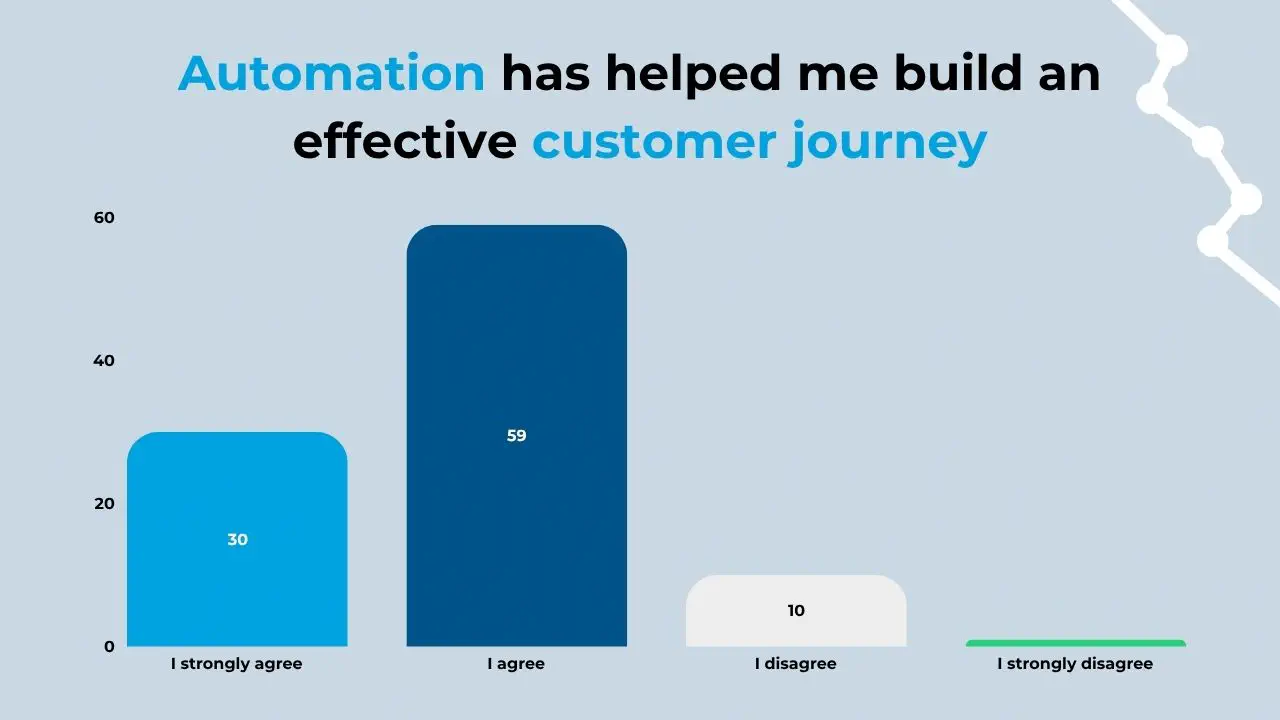
The user journey, also known as the customer journey, is a key priority for marketing teams at the enterprise level. According to a report by Ascend2, 89% of businesses claim that automation has enabled them to create a personalized experience for their customers**. As a result, they point to an improvement not only in the company-customer relationship but also in the sales funnel.** Q: Marketing automation has helped me build an effective customer journey
- I strongly agree: 30%
- I agree: 59%
- I disagree: 10%
- I strongly disagree: 1%
41% of businesses have an automated customer journey
Closely related to the previous point is the fact that, according to Statista, nearly half of businesses have a completely automated customer journey. These data show an exponential growth of this trend, as in 2023, only 10% claimed to have automated it. 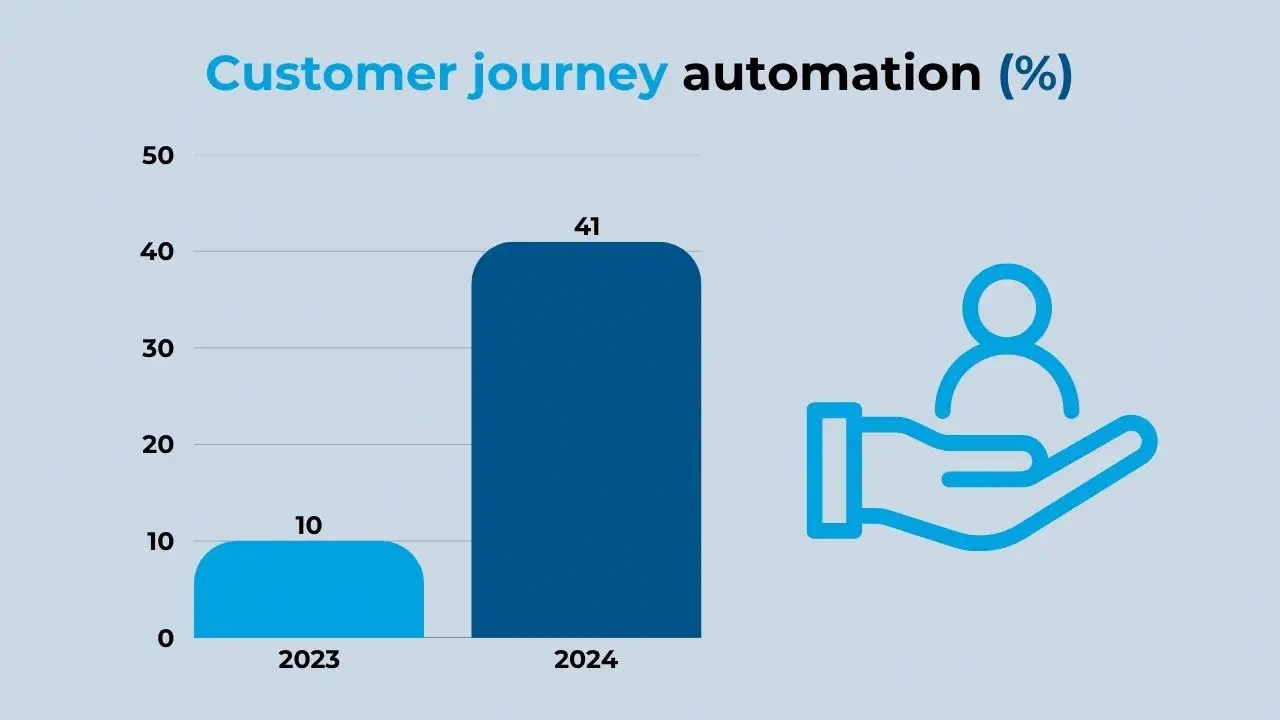
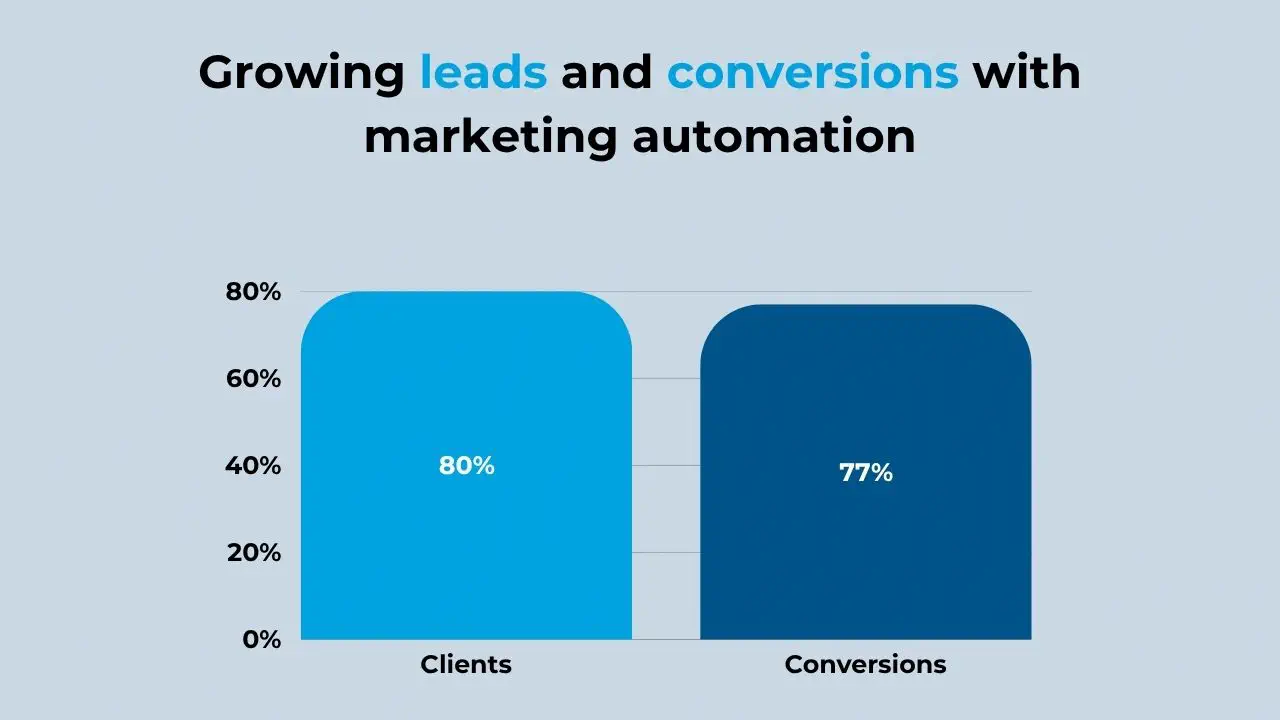
4 out of 5 businesses using any marketing automation tool have generated more leads
One of the most interesting aspects of marketing automation is its ability to capture a larger number of customers in a shorter period of time.
In fact, as pointed out by a recent study conducted by Invespcro, 80% of marketing automation users not only saw an increase in the number of leads but also a 77% growth in the number of conversions.
43% of marketing specialists say automation enhances the user experience
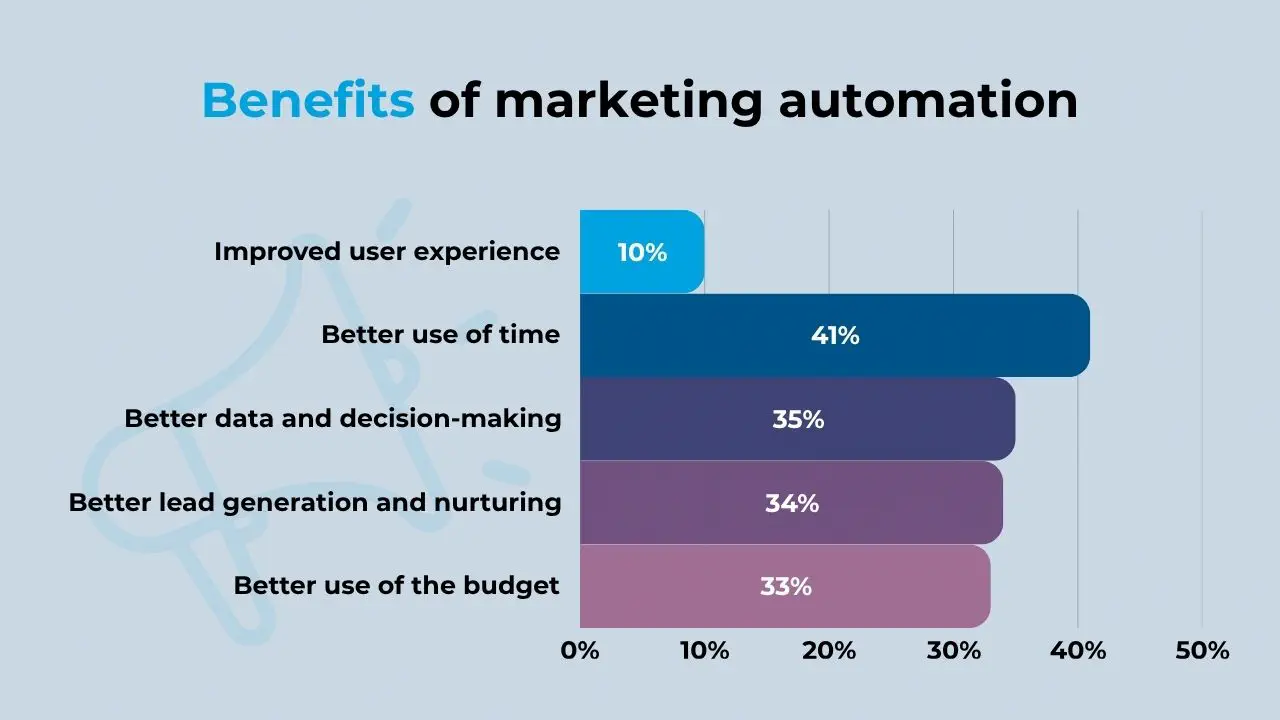
One of the greatest benefits of adopting a marketing automation platform at the enterprise level is an improved user experience. This is confirmed by a recent study conducted by Statista, which found that nearly half of users attest to this. In second and third places, we find improved time management and better data to support stronger decision-making.
Next, we present a detailed list of the study results:
Benefits of marketing automation: - Better user experience: 43%
- Better time management: 38%
- Better data and decision-making: 35%
- Better lead generation and nurturing: 34%
- Better budget utilization: 33%
Marketing Automation Market Statistics
Next, we will dive into the main market statistics of marketing automation. This market has experienced exponential growth in recent years, primarily driven by the rise of digitalization and the need to create and optimize personalized campaigns for clients.
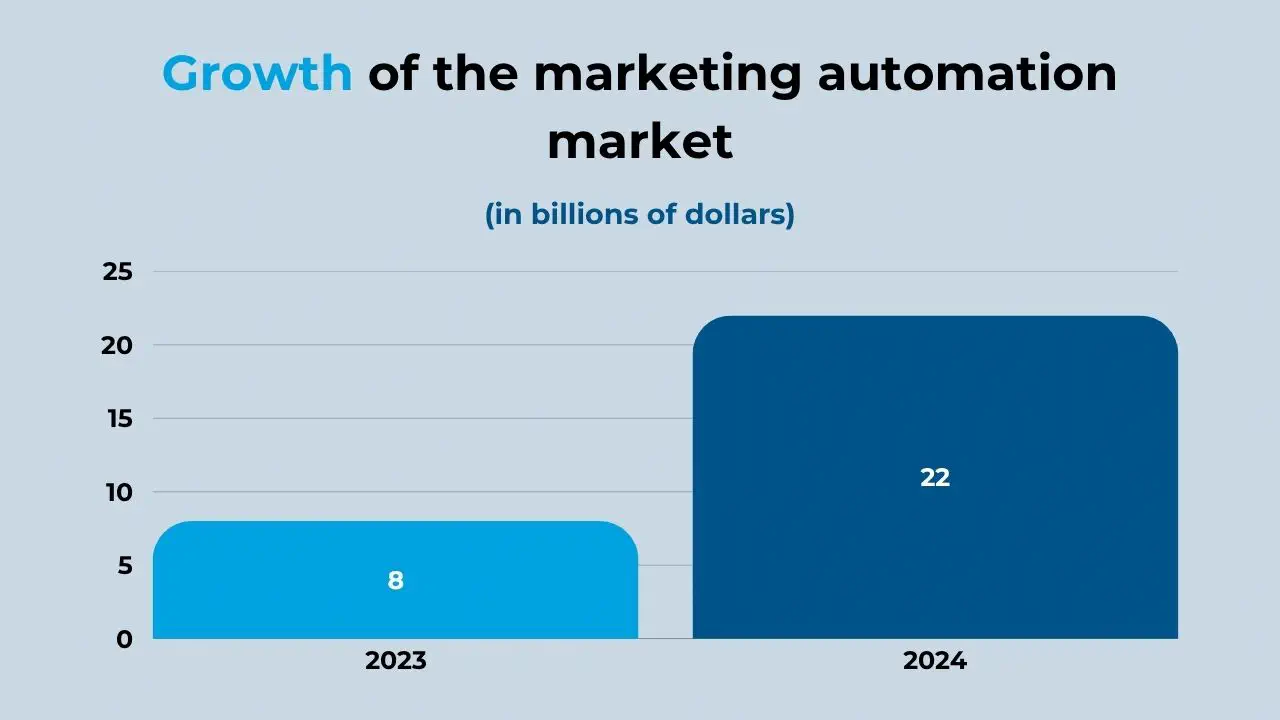
The marketing automation market will reach $21.7 billion by 2032
As noted by Statista, the marketing automation market is expected to reach $21.7 billion by 2032. This represents a 171.25% increase, considering that in 2024, the automation market reached a total of $8 billion.
This exponential growth is driven by the increasing demand for automation solutions among companies seeking to optimize their communication and sales strategies.
There are over 440 marketing automation tools available for companies worldwide
As we can see in the G2 catalog, at the time of writing this article, there are 445 companies offering marketing automation solutions for businesses. However, this number is only indicative, as trends suggest that demand will lead to an increase in the number of platforms in the coming years.
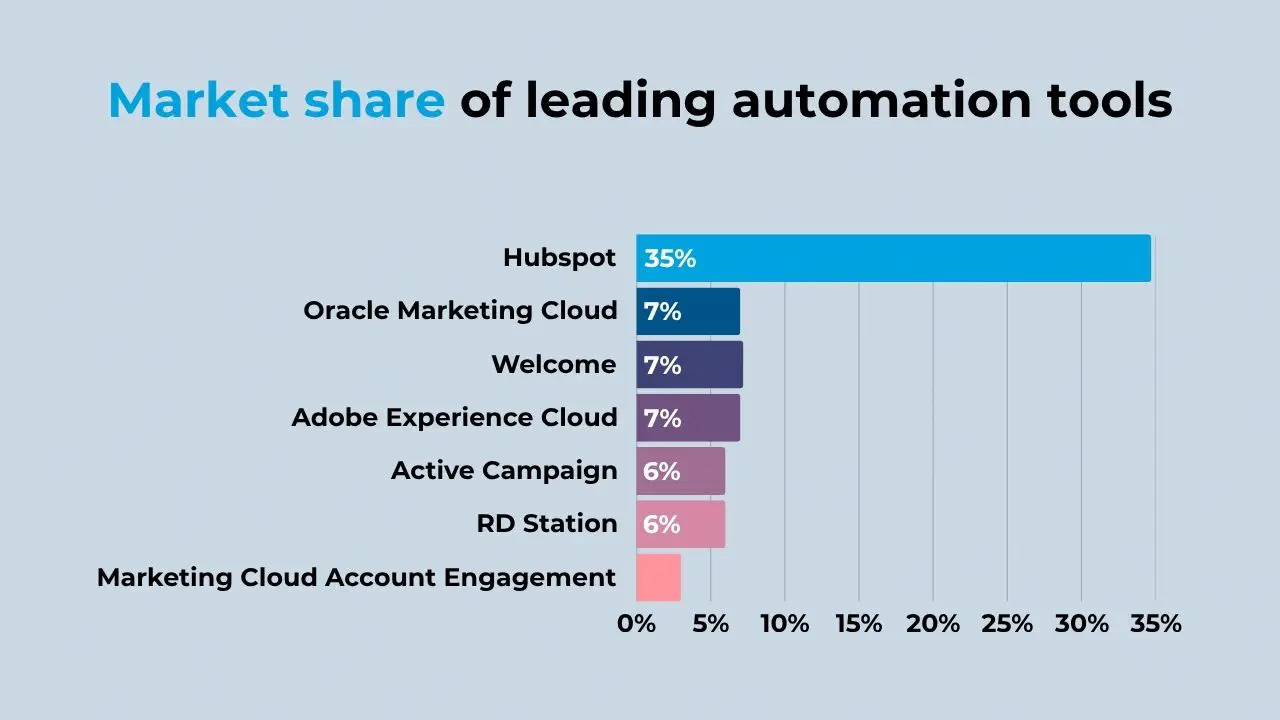
HubSpot has a 34.72% share of the marketing automation tool market
As of today, HubSpot is widely regarded as the undisputed leader among marketing automation platforms. As noted by Statista, the giant holds a 34.72% market share, followed by Oracle Marketing Cloud, Welcome, and Adobe Experience Cloud.
Next, we detail the results of the report:
Global market share of leading marketing automation tools: - HubSpot: 34.72%
- Oracle Marketing Cloud: 7.31%
- Welcome: 7.24%
- Adobe Experience Cloud: 7.05%
- Active Campaign: 6.21%
- RD Station: 5.83%
- Marketing Cloud Account Engagement: 2.9%
Marketing Automation Statistics in B2B (Business to Business) Strategies
Due to the extensive benefits of personalizing and creating effective user experiences, marketing automation has become a key factor in B2B strategies over the last few years. Below, we will review some of the most relevant data that highlights the use of so-called marketing automation within modern companies.
46% of B2B companies make extensive use of marketing automation
A recent study by Dun & Bradstreet explores the adoption and impact of marketing automation within organizations with B2B strategies. During the study, the interviewed organizations were asked about the level of marketing automation use in their companies. Almost half of the respondents admitted to making extensive use of these tools.
Q: What is the level of use of marketing automation in your company?
- Extensive use: 46%
- Limited use: 32%
- No use, but planning to implement it: 22%
98% of B2B marketing professionals say automation is key to campaign success
The use of marketing automation tools (SaaS) is currently a standard in the business world. They are capable of improving the workflow of the marketing team, as well as providing valuable data and insights to enhance the user experience.
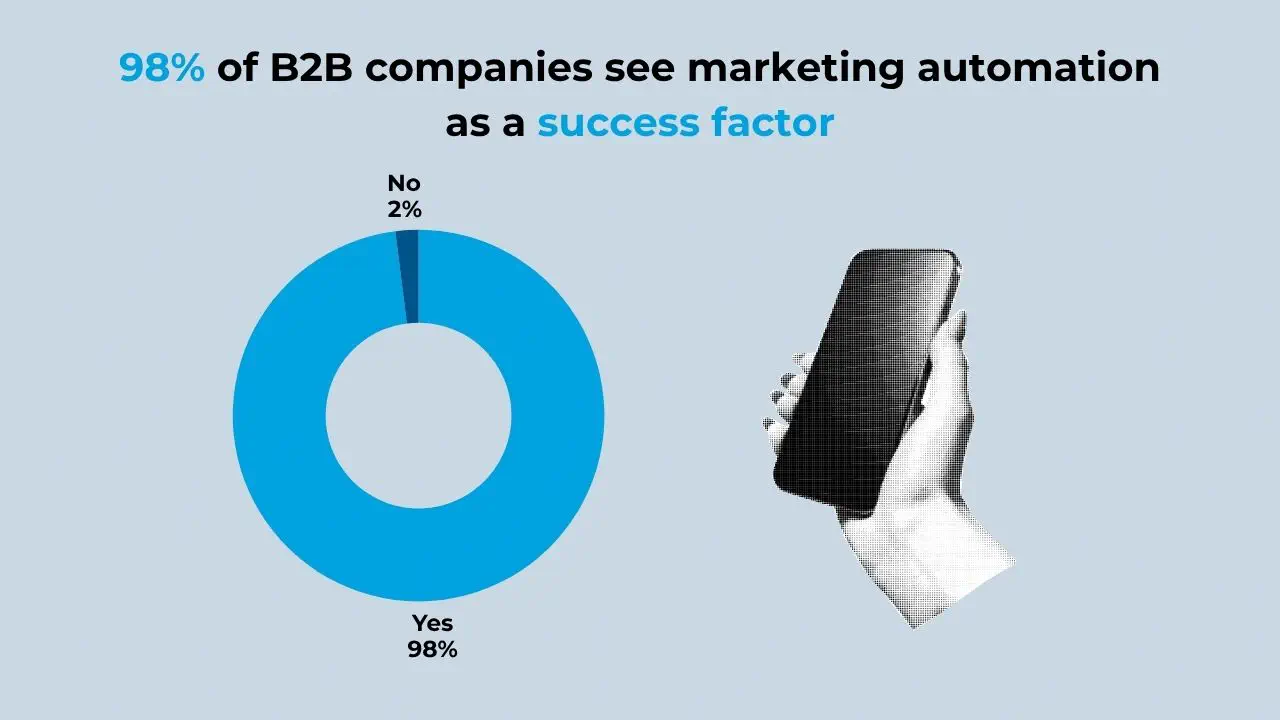
The impact of automation tools is such that, according to the research report The State of Marketing Automation by Adobe, 98% of companies using this software consider it critical for the success of their marketing campaigns.
Return on Investment (ROI) Statistics in Marketing Automation
If you are a company that has not yet implemented automation features in your marketing strategies, you are probably wondering if it’s worth investing in this type of software. A clear indicator of this can be found in the ROI, or return on investment. Next, we will review some key data that demonstrates how marketing automation significantly improves business revenue.
A company generates $5.44 for every $1 invested in marketing automation
A recent study by Nucleus Research shows that, on average, for every dollar invested in marketing automation, a company generates a total of $ 5.44, receiving substantial benefits in less than six months. This translates to a return on investment (ROI) of 544%.
76% of companies see a return on investment (ROI) in less than 1 year
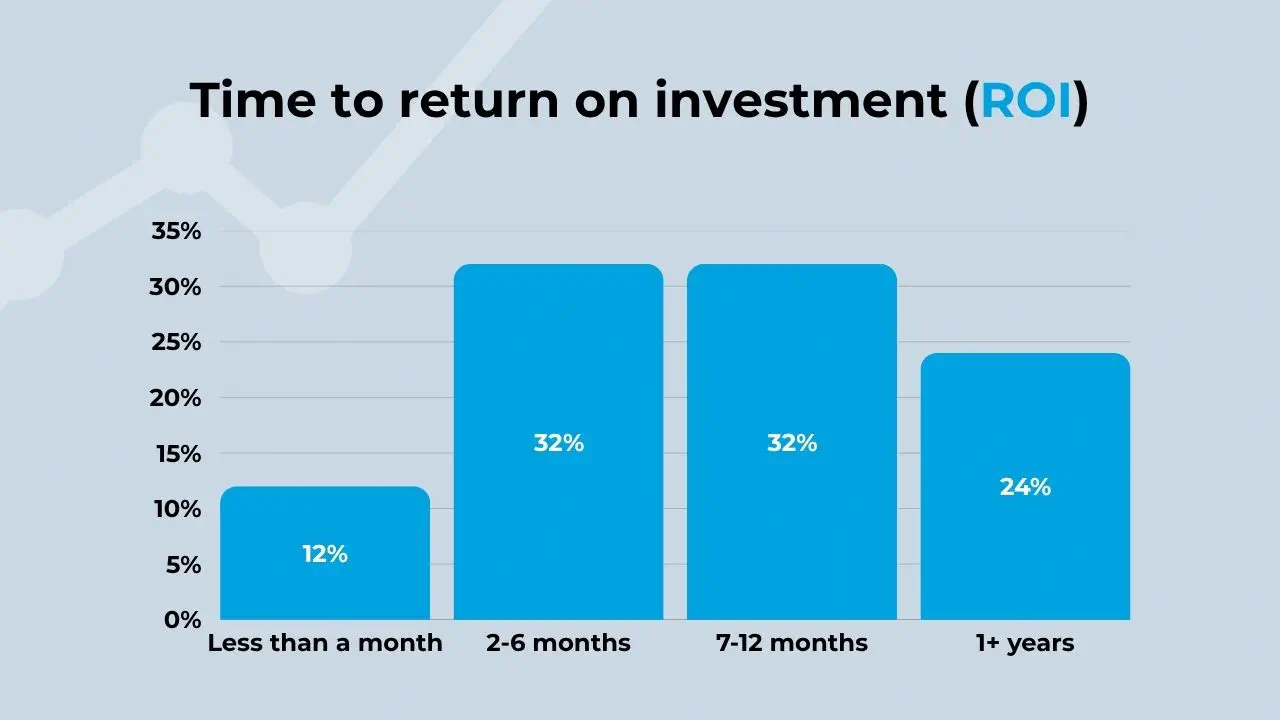
One of the key data points of the return on investment is due to marketing automation. Nucleus Research tracks the expected time for a company to start experiencing ROI. The results are highly satisfactory, with 76% achieving a return on investment within 1 year and 12% within 1 month.
Time until return on investment (ROI) with marketing automation: - Less than 1 month: 12%
- 2-6 months: 32%
- 7-12 months: 32%
- 1+ years: 24%
Statistics on the Use of Artificial Intelligence (AI) in Marketing Automation
The boom of generative AI has marked a turning point in marketing as we know it. It is capable of adding automated functions that discover potential customers, personalize their user experience, and generate new opportunities thanks to dynamic and adaptive analysis of a business’s data.
Next, we compile some of the most interesting trends and statistics regarding the use of artificial intelligence within marketing automation functions.
90% of companies have already optimized up to half of their marketing tasks thanks to artificial intelligence.
As a study conducted by the Marketing Artificial Intelligence Institute reveals, 90% of companies have optimized up to 50% of their marketing functions through the use of artificial intelligence. It is expected that, over the next three years, the percentage of automated tasks will increase to 75%.
| Percentage of tasks automated with AI: | 2024 | Next 3 years | | — | — | | 0% | 6% | | 1-10% | 40% | | 11-25% | 31% | | 26-50% | 13% | | 51-75% | 5% | | 76-100% | 2% | | Not sure | 4% |
The global AI market applied to marketing is expected to reach $107.54 billion by 2028.
According to data compiled by Statista, the global market for artificial intelligence applied to marketing is expected to reach $107.54 billion in 2028. It is also anticipated to experience an annual growth rate (CAGR) of 36.6% from 2024 to 2030.
39% of specialists believe that AI-driven hyper-personalization is the future of email marketing.
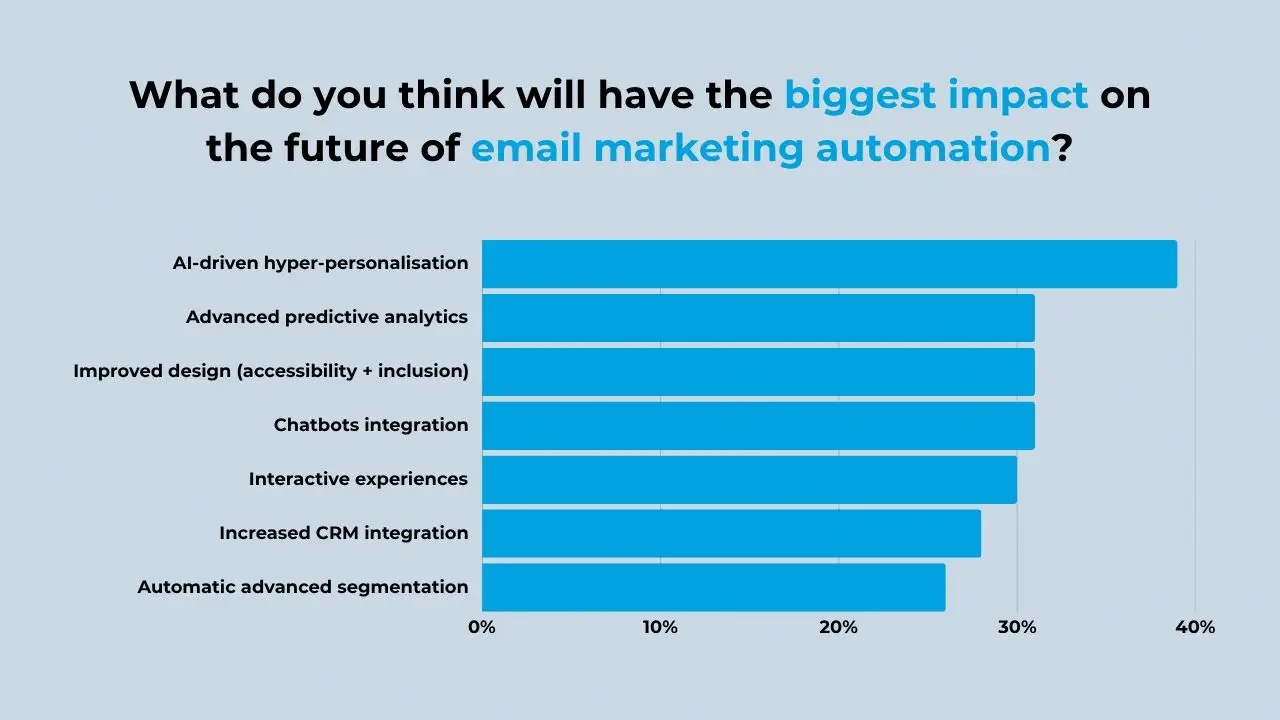
Marketing specialists globally believe that AI-driven email hyper-personalization will create a turning point in email marketing as we know it. This is demonstrated by the study, The State of Email Automation, conducted by Ascend2, where almost 40% of respondents identified hyper-personalization as the most impactful change in the future of email campaigns.
Q: What do you think will have the greatest impact on the future of email marketing automation? - AI-driven hyper-personalization: 39%
- Advanced predictive analytics: 31%
- Improved design focusing on accessibility and inclusion: 31%
- Integration of emerging communications (chatbots): 31%
- Advanced interactive experiences: 30%
- Greater integration in CRM: 28%
- Real-time advanced segmentation automation: 26%
Conclusion
Automation has become, in just a few years, the key tool for optimizing marketing strategies, improving the customer experience (customer journey), and maximizing the return on business investment. With a 75% global adoption rate and 90% of companies automating up to half of their tasks thanks to the use of artificial intelligence (AI), we are at a turning point in marketing as we know it today.
The transformational potential of marketing automation appears to have no barriers within B2B strategies. 98% of marketing specialists assert that its use generates a critical positive impact on campaigns, increasingly revealing that it will mark the future of the sector. This is why companies that still hesitate to invest in automation should look at this data. The use of automation in marketing is not a mere trend, but a standard to follow if one wants to succeed in the industry.